
Sign in
Sign in or register to continue to the course payment options.
Create your free account
#FOAMedPart of the free, open-access medical education movement
HepaticAnesthesia Handbook
Edition 1.19
Anesthesia for major liver surgery and liver transplantation
Download links are available by email or after signing in.
Formulas and calculators
Shared entries carry over in this tab.
MELD-Na
Estimates short-term mortality while awaiting a liver transplant. This formula was used in earlier U.S. liver allocation policy.
How it’s calculated
- MELD base = round(10 × [0.957 × ln(Cr) + 0.378 × ln(bilirubin) + 1.120 × ln(INR) + 0.643])
- If MELD base > 11, MELD-Na = round(MELD base + [1.32 − 0.033 × MELD base] × [137 − Na]).
- 30- or 90-day mortality (%) = 100% − published survival (%) at that score and interval.
Use mg/dL for Cr and bilirubin and mmol/L for Na. Floor Cr, bilirubin and INR at 1. Cap Cr at 4 and use 4 when qualifying dialysis applies. Limit Na to 125–137 and both scores to 6–40.
Courses
Anesthesia for Major Liver Surgery and Liver Transplantation
Follow the patient from the preanesthesia visit through surgery and the first days of recovery. The course covers major liver resection and transplantation.
Course at a glance
Course review version 165
Short courses
Study a specific topic for free. A final assessment and certificate are available.
Preanesthesia assessment and liver transplant candidate selection
How cardiopulmonary reserve, kidney function, frailty and acute deterioration shape adult liver transplant candidacy and perioperative risk.
- Preanesthesia assessment
- Candidate selection and the organ offer
Objectives and topics
Preanesthesia assessment
The assessment relates organ reserve and current disease to the demands of liver transplantation.
Candidate selection and the organ offer
Waiting-list urgency, clinical trajectory and the offered graft shape the decision to proceed.
Psychosocial Assessment of Adult Liver Transplant Candidates
Six simulated cases for psychiatrists and psychologists, from the first interview to a recommendation for the transplant committee.
Anatomy and surgical techniques of liver transplantation
Follow the vessels and bile ducts through recipient hepatectomy and graft reconstruction, with attention to what changes for anesthesia.
Liver graft perfusion
Follow the graft from donation through preservation, and compare what trials of hypothermic and normothermic perfusion measure.
Invasive and noninvasive monitoring in liver transplantation
Choose a monitor for the question at hand. Learn what each measurement can tell you during surgery and where it can mislead.
Intraoperative TEE for liver transplantation
Use clinical clips to learn the transesophageal echo views, then practice comparing and reporting what changes at clamping and reperfusion.
Pharmacology for liver transplantation
How liver disease changes the drugs we give, and which perioperative interactions to check before prescribing.
Hemostasis management and viscoelastic test interpretation: focused update
Read a viscoelastic tracing alongside what you see in the surgical field and what the patient has already received.
Renal failure, dialysis, ECMO and intraoperative shunts in liver transplantation
Assess kidney function, discuss renal replacement therapy, and review selected uses of extracorporeal support and shunts.
Intraoperative liver transplantation—cases and practical management
Work through cases in the order they unfolded. Compare what the team knew at each point with what became clear later.
Postoperative care of liver transplant recipients
What the ICU needs to know at handover, what to watch during early recovery, and when to call the transplant team.
Prehabilitation for liver transplantation
For physical therapists and dietitians caring for patients on the waitlist. Bring frailty and intake assessments together in one plan and revisit it as the patient’s condition changes.
Courses for operating-room staff
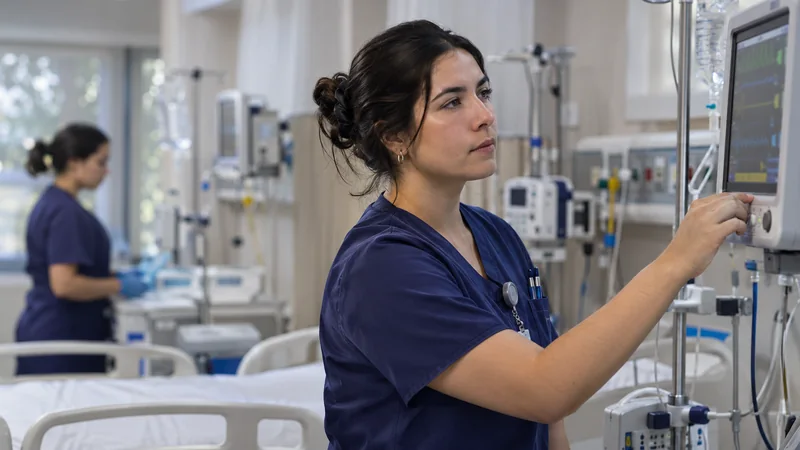
Nursing in liver transplantation
Adult liver transplant nursing in the operating room, intensive care and recovery through discharge.
- Preparation and intraoperative nursing
- ICU handover and recovery
Objectives and topics
Preparation and intraoperative nursing
How the recipient’s baseline, operative phases and changes in support inform intraoperative care.
ICU handover and recovery
How clinical trends guide ICU reassessment, recovery and medication safety after discharge.
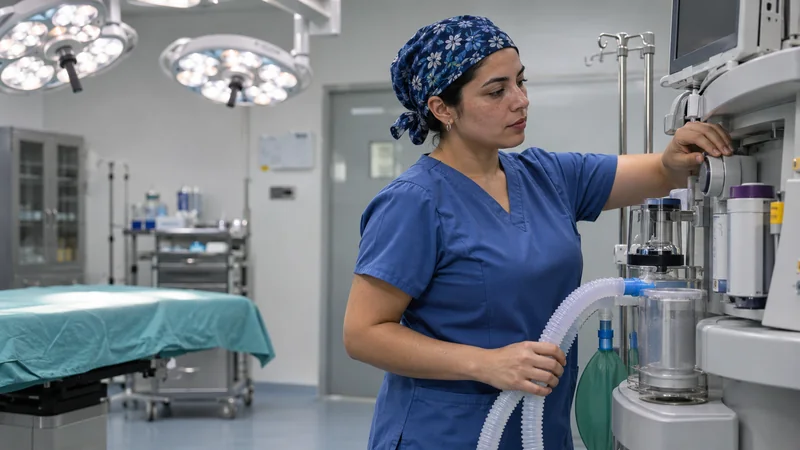
Anesthesia technicians in liver transplantation
Set up the room and check access, monitors, blood products, and prescribed drugs as the transplant moves from dissection to reperfusion.
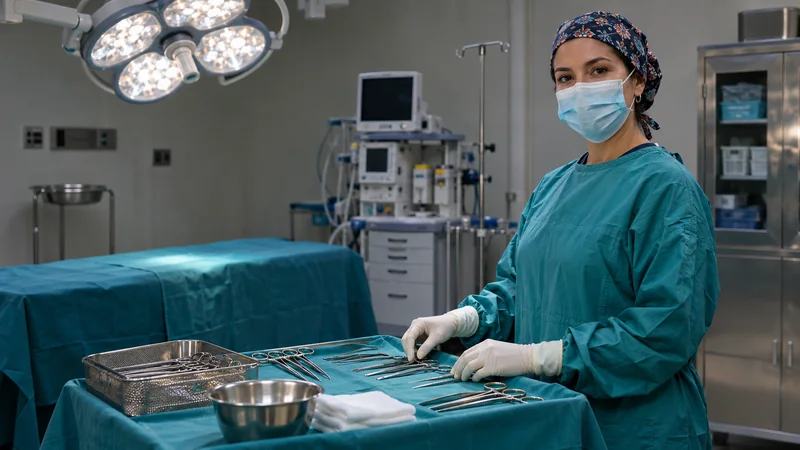
Surgical instrumentation for liver transplantation
What the surgical team needs at each phase, from clamps, retractors and fine sutures to cell-saver suction, graft ultrasound, reperfusion and packing.
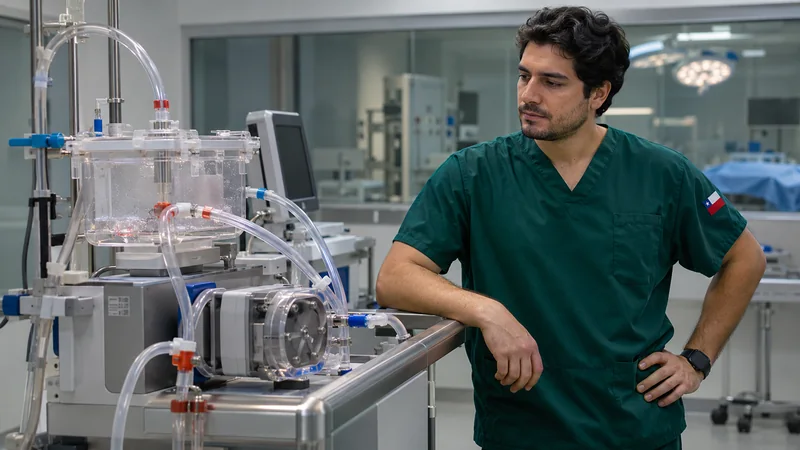
Practical update for perfusionists
Circuit setup, hypothermic oxygenated perfusion, and graft handover.
Coming soonAnatomic pathology · The future of transplantation · Psychiatry for liver transplant patients
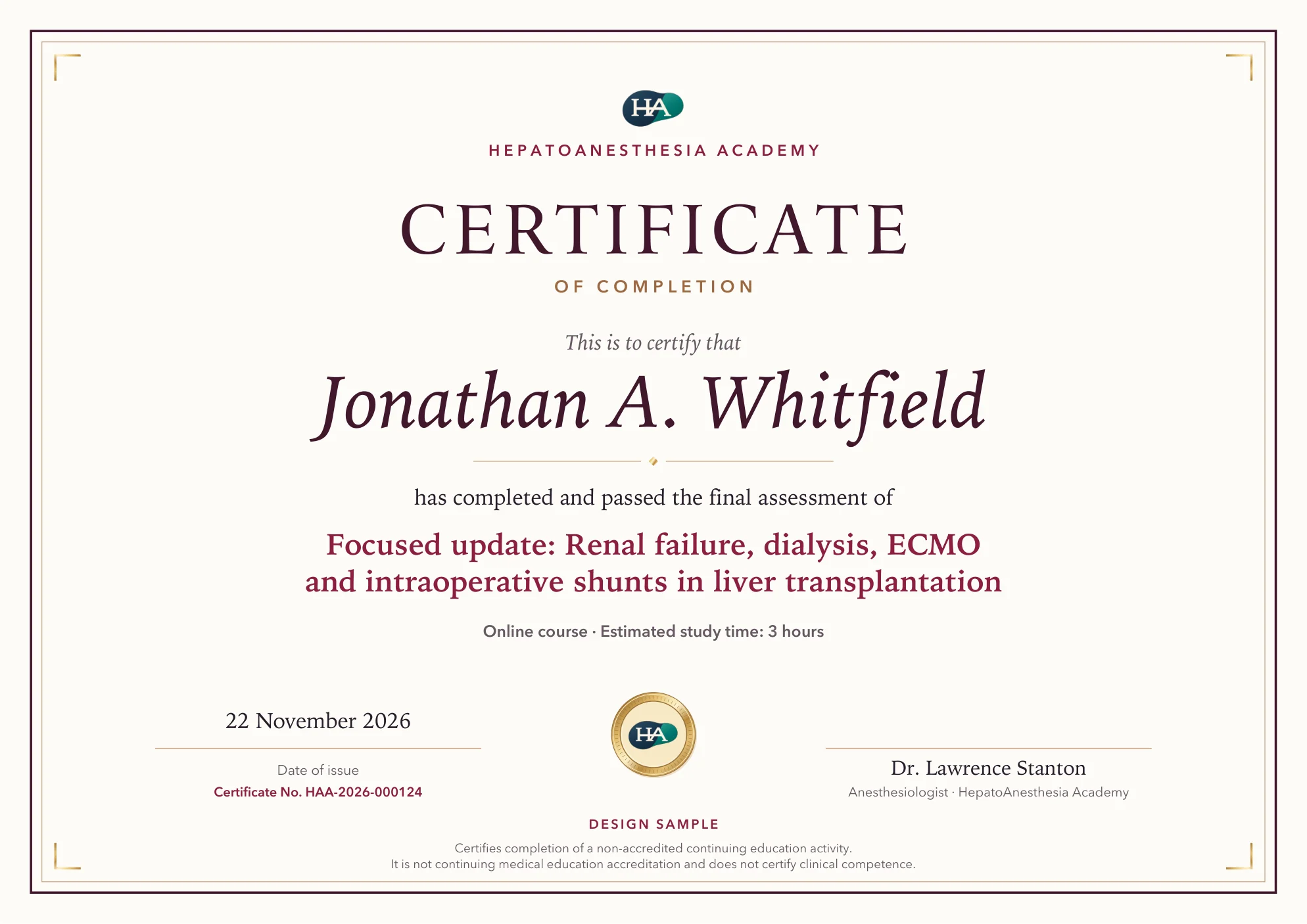
A certificate you can verify
Complete the course requirements and earn a digital certificate with a verification QR code. You can find it in your Academy account and receive it by email after official launch.
View my certificatesCertificate of completion for a non-accredited continuing education activity.
Help keep the content free
Your donation helps keep the handbook and courses available to everyone.
Help us improve
Found an error or a passage that’s hard to follow? Tell us where. You can also suggest a topic.